Path A
Stay fully exposed
Keep paying the utility bill as rates, delivery charges, and supply costs change — on someone else's schedule.

In Maine, CMP and Versant rates have kept climbing — supply adjustments, delivery charges, and approved increases stacking up year after year. The homeowners who got ahead of it stopped reacting to the bill and started controlling it.
This review shows what is really happening, what it could mean over time, and why locking in a predictable solar rate has become one of the smartest moves a Maine household can make.
A home-specific review shows whether solar fits your roof, usage, and budget — and what rate you could lock in.
The chart below compares a typical Maine utility bill that keeps rising against a locked, predictable solar payment. The longer the timeline, the wider the gap becomes.
Illustrative example based on typical Maine usage and recent rate trends. Not a quote — your real numbers come from a home review.
A bill can feel manageable one year and completely different the next. Supply rates change. Delivery charges change. Transmission costs change. New approvals get passed through. By the time most families feel the impact, it's already baked into the monthly bill.
The risk is simple: homeowners rarely get a warning early enough to plan. They open the bill, feel the increase, and have to find room for it in a budget already carrying groceries, insurance, vehicles, taxes, and heating.
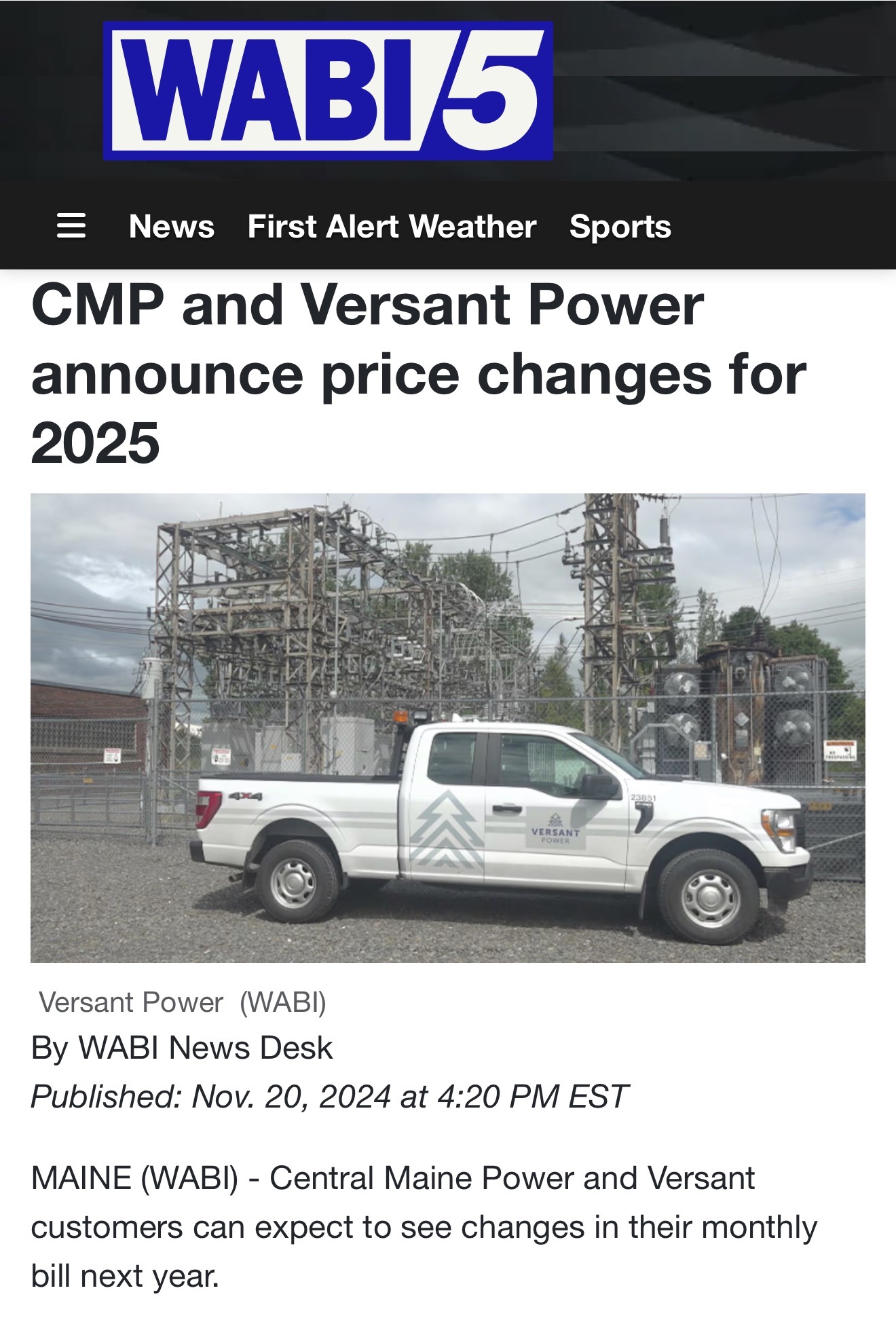
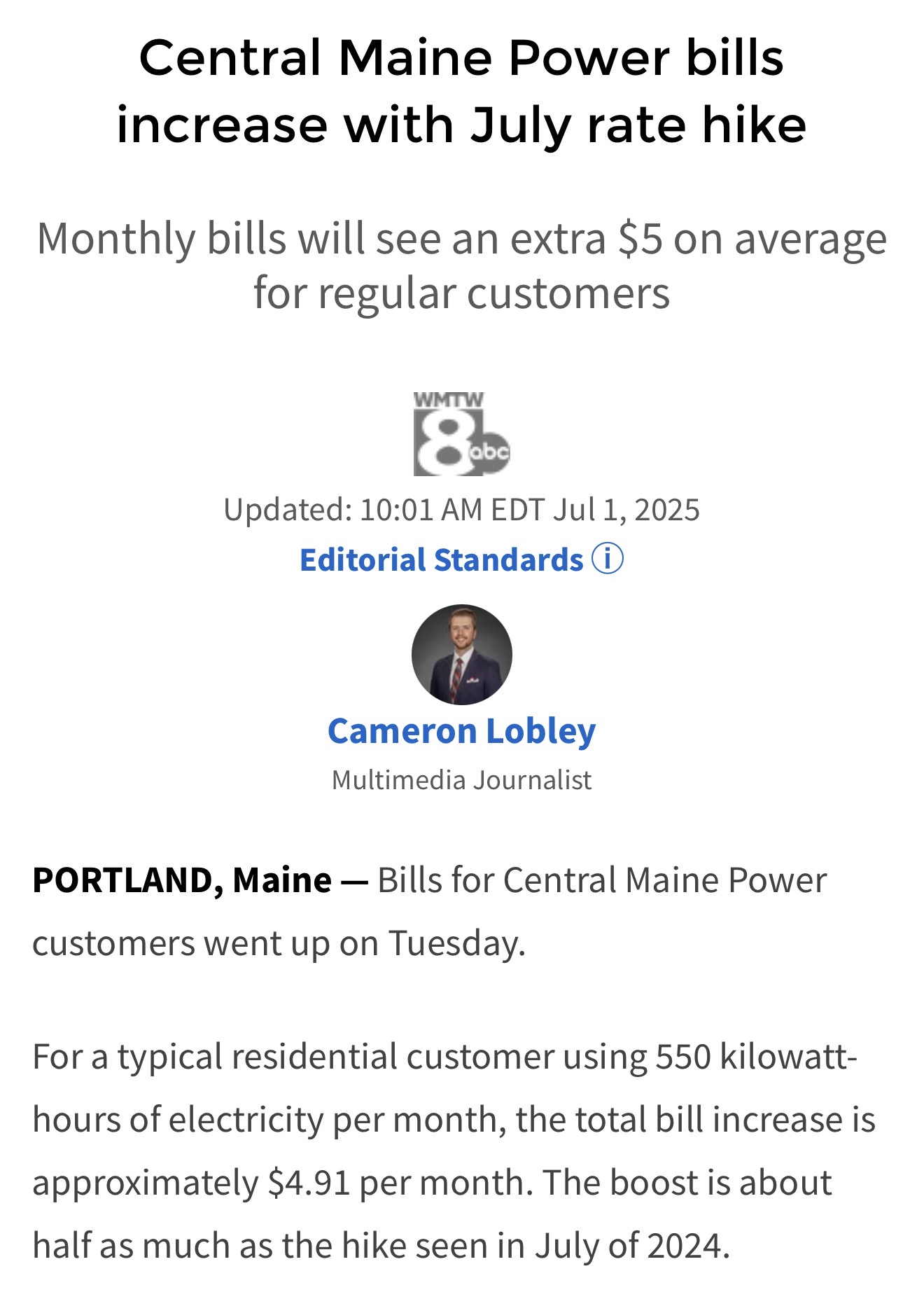
Recent CMP and Versant updates show how fast the conversation shifts from one rate notice to the next. A single increase may feel manageable. Repeated increases become the kind of expense that forces families to rethink the path they're on.

It stops being only, “Why did my bill go up?”
It becomes, “How much control do I actually have over this long term — and what happens if I keep waiting?”
Most homeowners don't look into solar because they love solar panels. They look into it because the electric bill stopped feeling predictable — and the ones who acted are glad they did.
The CMP and Versant pages include live sliders that show how electricity costs can compound over a 5–25 year period. These are examples only — not a quote. The real next step is reviewing your actual bill, usage, roof, and eligibility with someone who can walk you through the numbers.
You shouldn't have to guess who you're working with. Before you schedule anything, you should be able to see real reviews, completed projects, local installation activity, and a team willing to explain the process clearly.


Use the map below to view personal installation activity and get a better sense of the work being completed locally. This is about trust before an appointment ever happens.
Open installation mapUtility headlines, bill structure, and project options explained in plain English so the decision feels clear instead of rushed.
If solar makes sense, your project is guided from consultation through design, permitting, interconnection, installation, and activation.
Solar, roofing, battery storage, and related home energy work reviewed together so the plan fits the home, not just the sale.
Every home is different. A quick review helps you understand your usage, your roof, your current bill, and whether locking in a predictable solar plan makes sense before more increases land in your monthly budget.
Review public Versant updates, compare possible long-term cost paths, and understand what staying fully exposed could mean for your household before another change shows up on the bill.

Versant customers may see changes from more than one part of the bill. Delivery changes, supply rates, grid costs, and future updates don't always move together — but they all affect what the homeowner pays.
Looking at one bill only shows the current moment. Looking at the path helps you understand what staying fully exposed could mean over the next 5, 10, or 25 years.
The question isn't whether one headline matters on its own. It's how many future changes your household wants to keep absorbing without reviewing another option.
Use the sliders to estimate how annual rate changes can compound. This is not a solar quote. It's a simple way to understand the pressure of staying fully exposed if nothing changes.
Some homeowners can replace part of their unpredictable utility exposure with a stable home energy plan. A quick review shows whether your roof, usage, current bill, and available options line up.
Many CMP customers aren't frustrated by one increase. They're frustrated because the bill keeps changing, the explanations are hard to follow, and the final number still lands in the household budget every month. This review shows the pattern in plain English so you can decide whether staying fully exposed still makes sense.
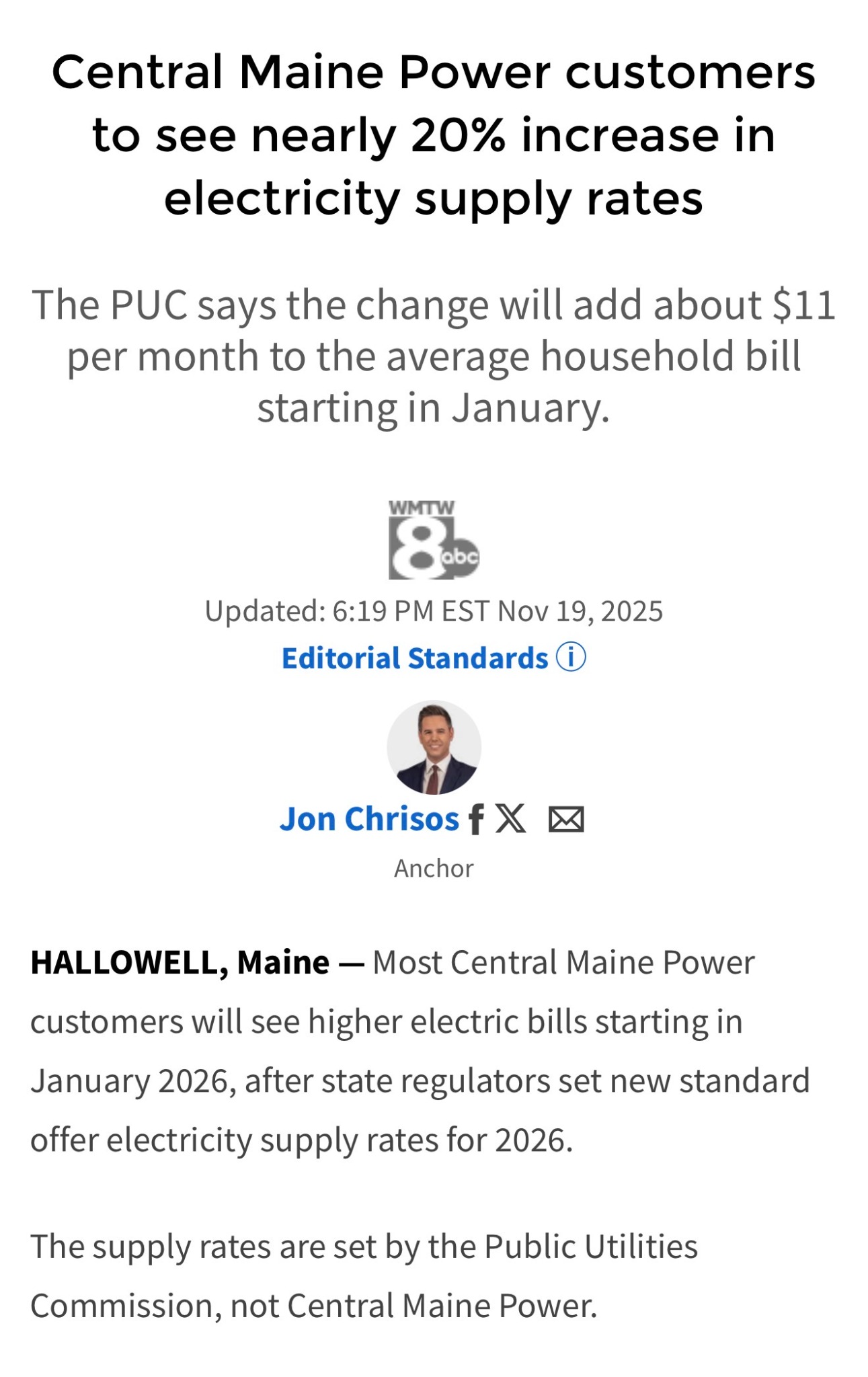
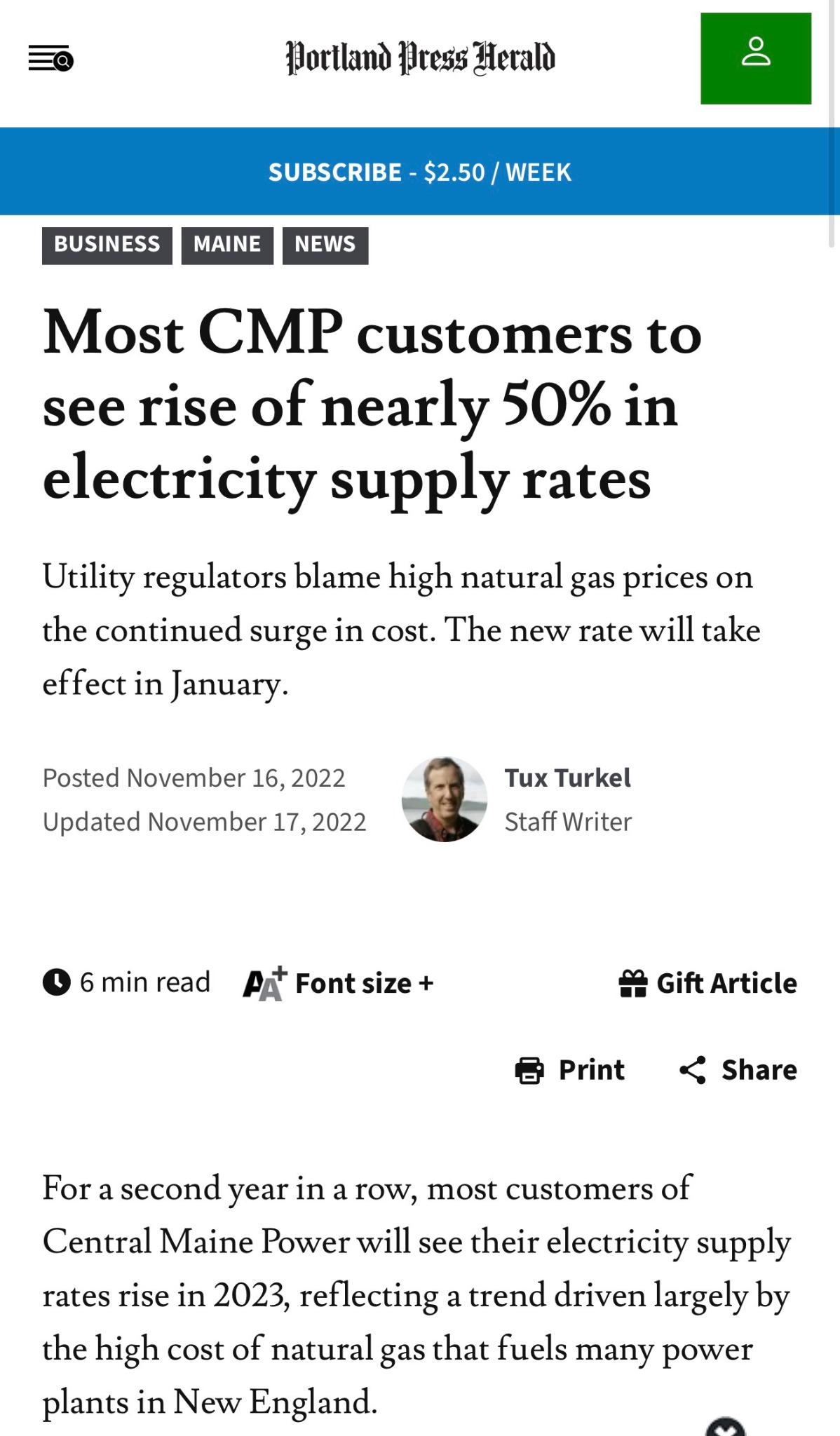
Headlines warned many CMP customers would see supply rates rise sharply heading into 2023. For families, that wasn't just a headline — it was another monthly budget hit.
Delivery, transmission, and system-cost stories kept stacking up, with customers repeatedly told the increases were needed while still being responsible for the final bill.
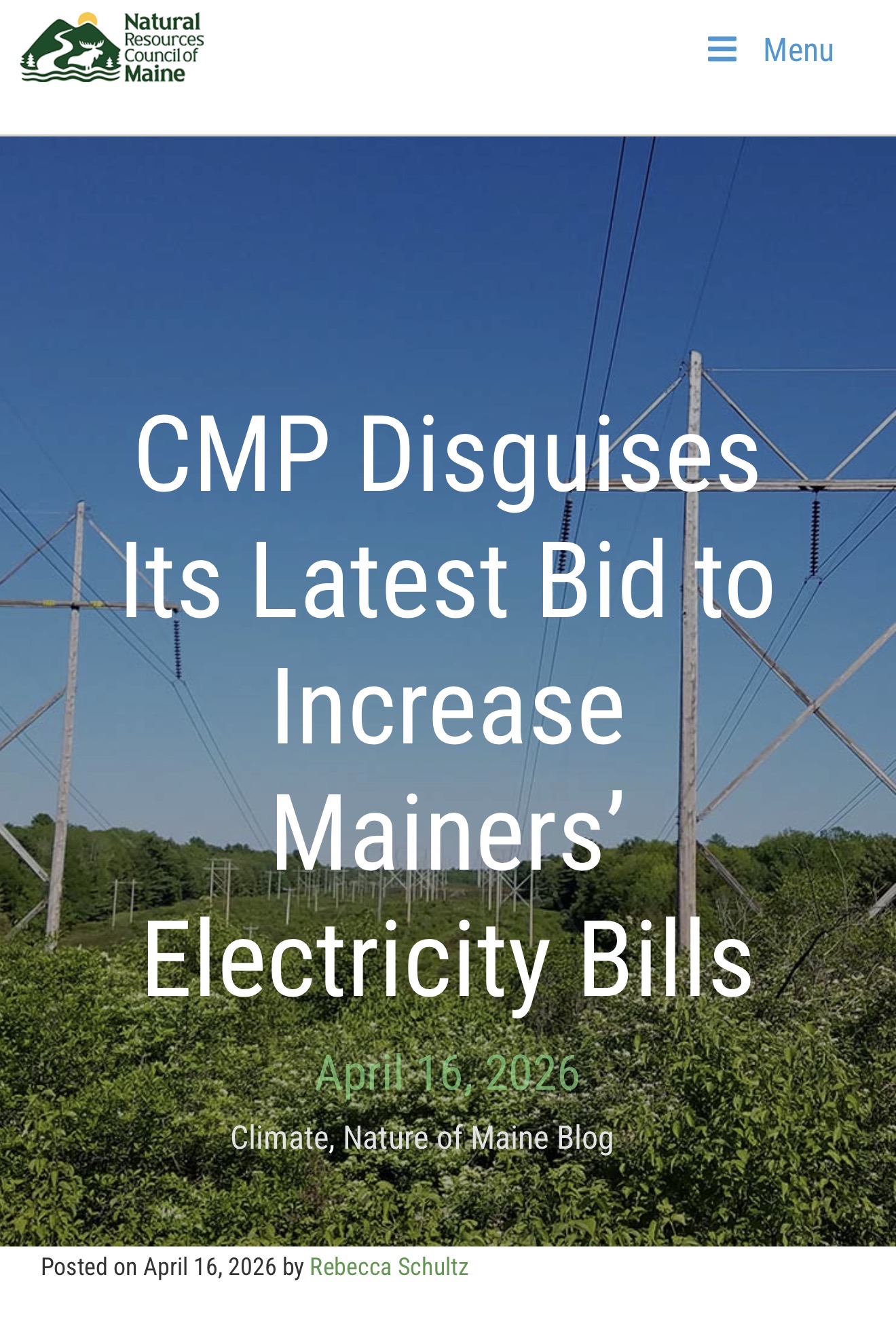
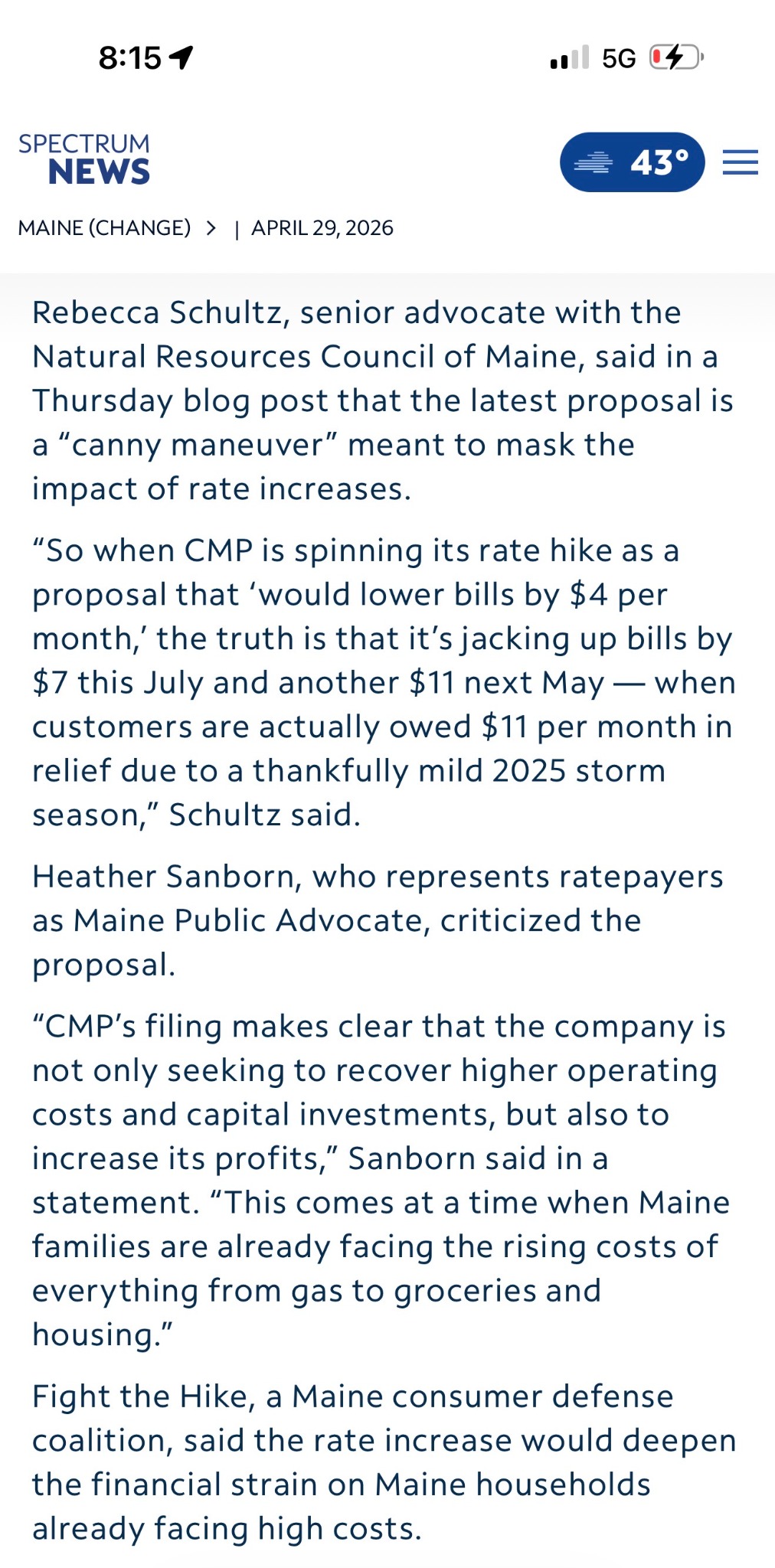
New reporting and public criticism point to additional CMP proposals and future bill impacts still being debated. The uncertainty itself is the problem for homeowners trying to plan.
A few dollars here. Eleven dollars there. Another proposal next year. Another transmission charge. Another standard offer change. On paper, each increase sounds manageable. In a household budget, they stack on top of groceries, vehicles, insurance, taxes, and winter heating.
The real concern isn't one headline. It's staying fully exposed to a system where future electricity costs are decided outside the home.
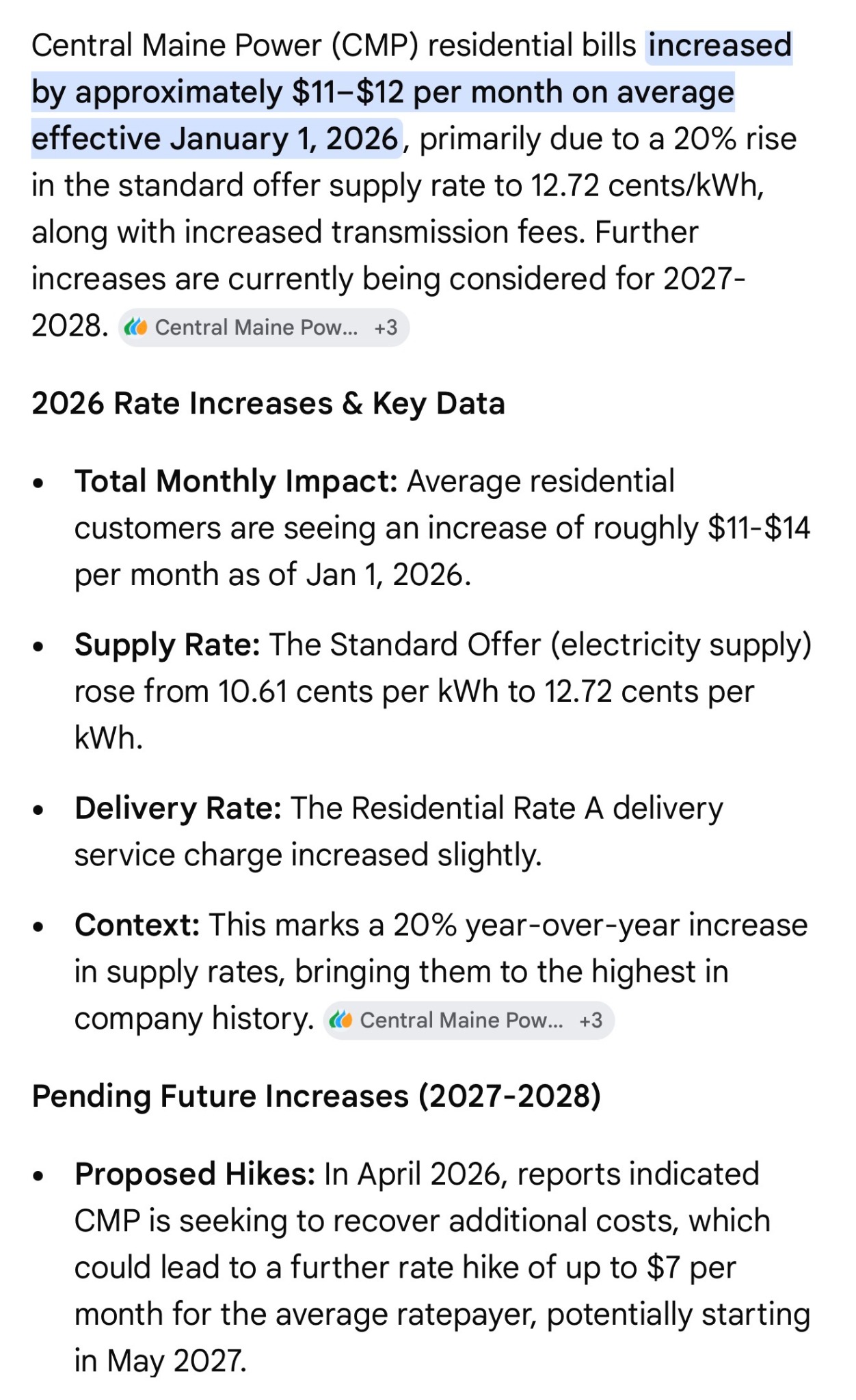
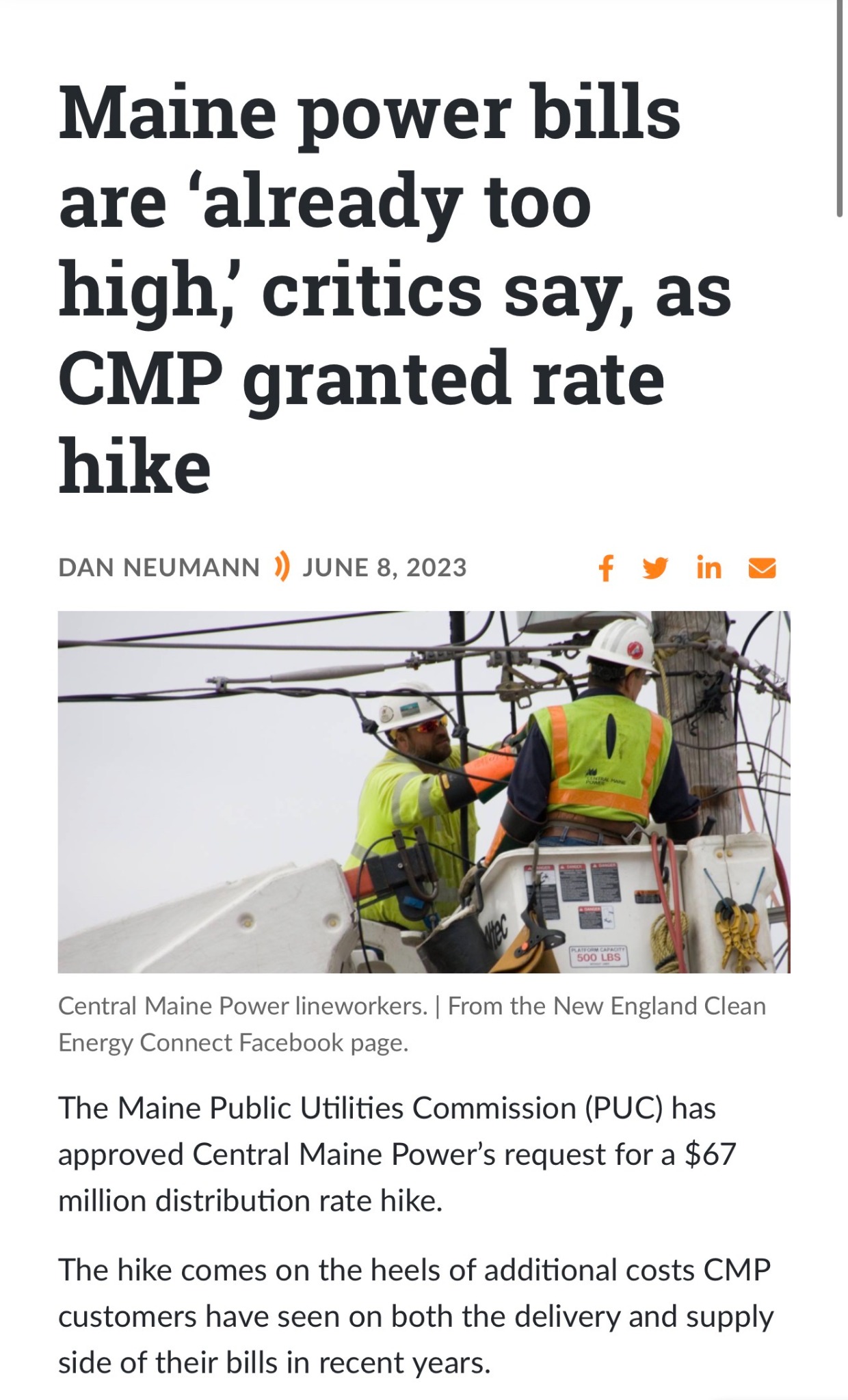
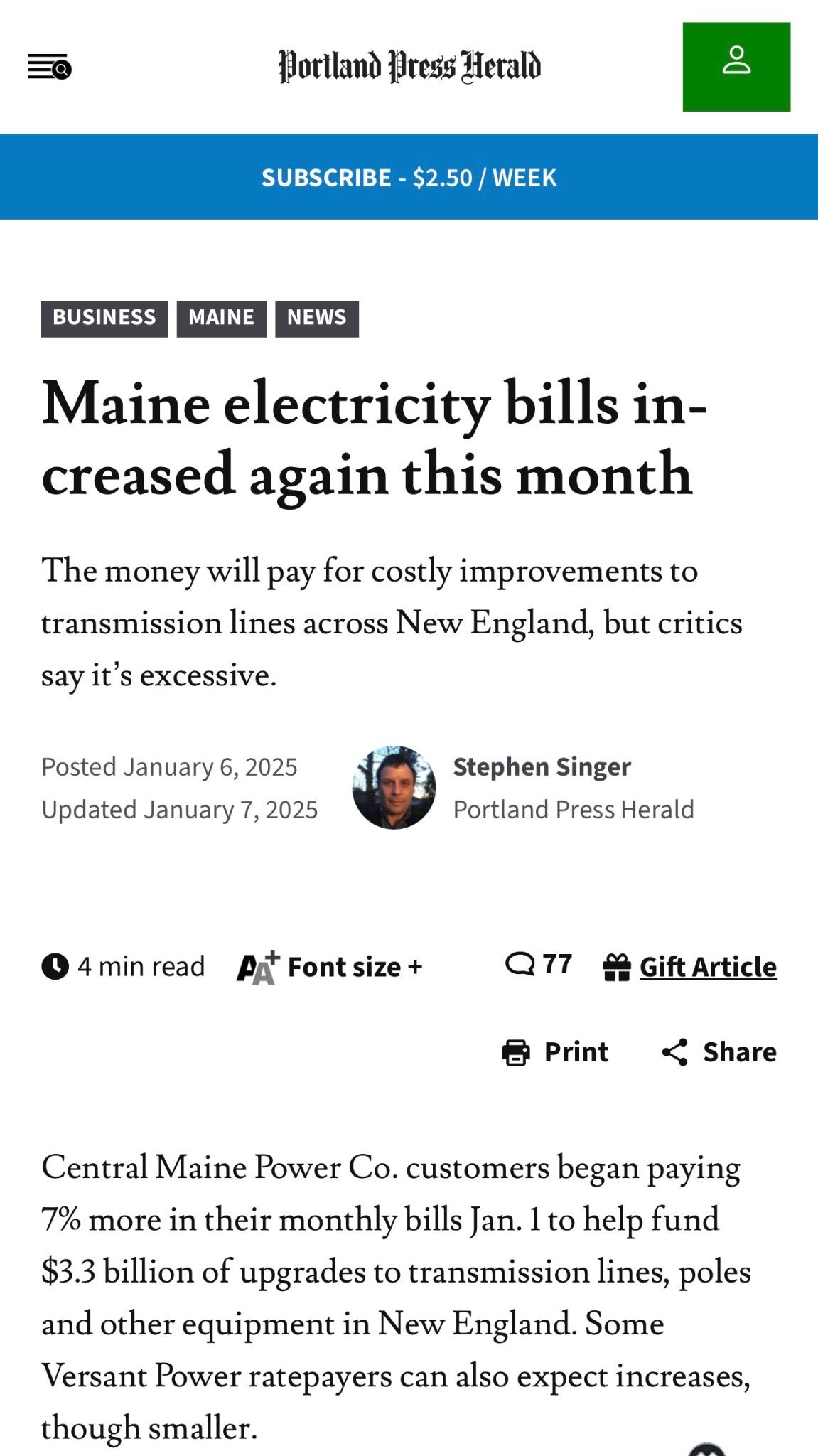
These reports show a consistent pattern of rate pressure, public debate, and warnings from Maine news outlets and advocacy groups.
At some point, the question shifts from “Why did my bill go up?” to “How much control do I want over my future energy costs?”
CMP may not control every part of the bill, and regulators play a role. But the homeowner still pays the final number. The bill doesn’t care which line item caused the pain.
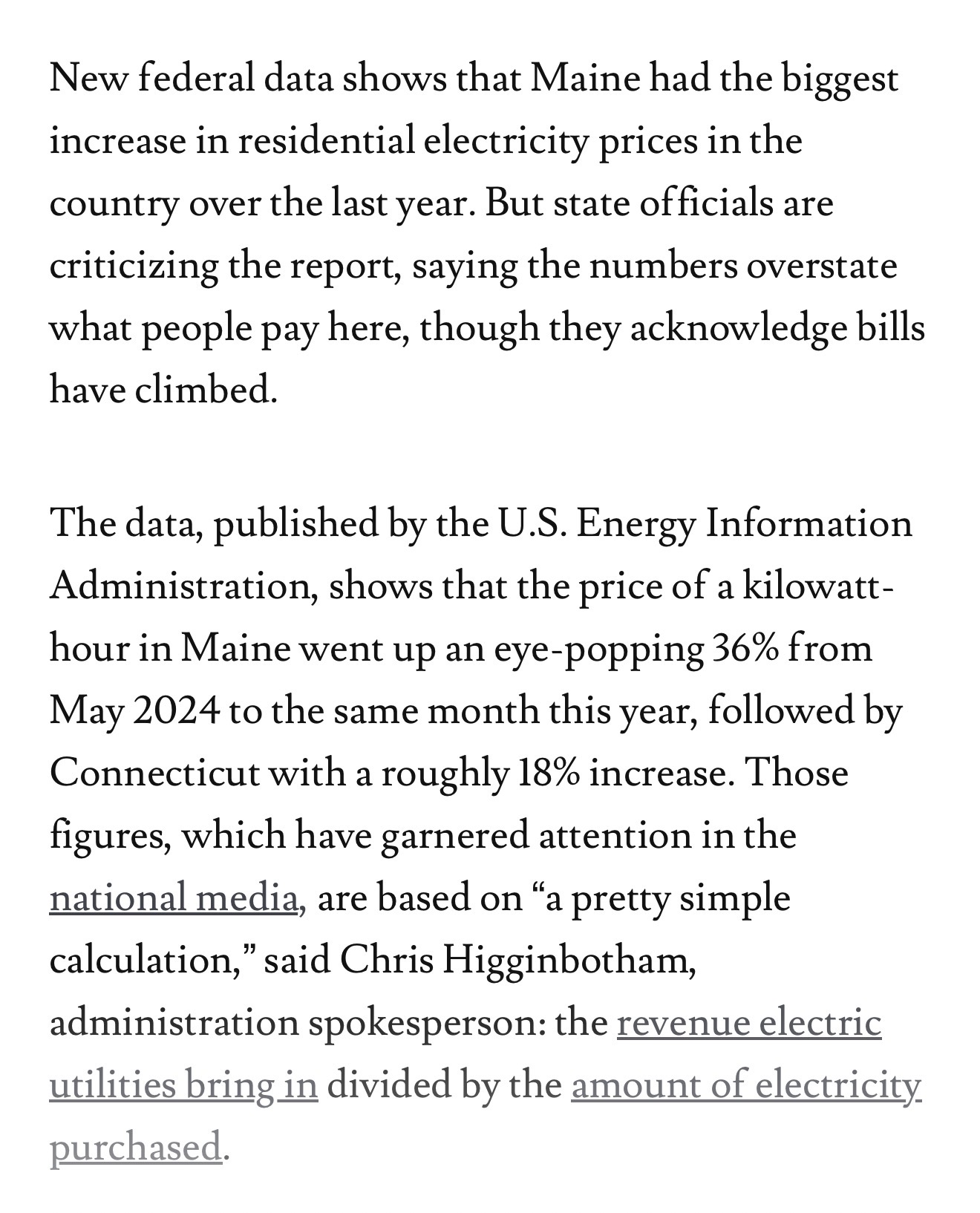
Most families don’t make a change because of one article. They start looking at options when they realize the pattern is bigger than any single headline. If rates keep rising, waiting doesn’t reduce exposure — it simply leaves the household in the same position.
Use the sliders to estimate how long-term electricity costs can move. This is not a solar quote. It's a simple way to understand the pressure of staying fully exposed if nothing changes.
Some homeowners can replace part of their unpredictable utility exposure with a more stable home energy plan. A quick review shows whether your roof, usage, current bill, and available options line up.
Your electric bill is usually more than just the electricity you use. Supply rates, delivery charges, transmission costs, utility approvals, and regional energy markets all affect the final number. Understanding those pieces is the first step toward deciding whether solar deserves a serious look.

Households feel changes from approved utility updates, annual standard offer changes, transmission-related adjustments, and broader regional market pressure. You may not control which line item changed, but the final bill still has to be paid.
In a basic net metering setup, solar production serves the home first. When production is higher than what the home uses in that moment, the excess can flow back to the grid. When the home needs more than the panels produce, electricity comes from the grid. Solar doesn't make every utility charge disappear, but for the right home, it reduces how much of your monthly cost stays exposed to future increases.

New England power prices stay tied closely to natural gas. LNG markets, winter fuel constraints, and global events can all ripple into local electricity costs.
Electrification and data-center discussions across New England have increased attention on future load growth and what that means for affordability.
Waiting doesn't stop rate increases. It only keeps the household exposed to whatever comes next. Reviewing early gives you time to understand the numbers before another change becomes part of the monthly bill.
Most homeowners aren't looking for a sales pitch. They want someone to explain the bill, show the numbers clearly, answer the obvious questions, and tell them whether the home actually makes sense for solar.
A 5.0 Google rating and A+ BBB accreditation give homeowners third-party proof before any appointment.
Real installs across the area, with a personal installation map you can open and explore yourself.
Solar, roofing, and battery storage considered together so the plan fits your house and your budget.
If solar makes sense for your home, you'll see it in the numbers. If it doesn't, you'll know that too. Either way, you leave with a clearer understanding of your bill and your options.
You don't need to be ready to buy solar. You only need to be ready to understand your numbers. A home energy review gives you a clear look at your usage, utility rate, roof layout, and whether solar could create a more predictable path for your household.
No pressure. No guesswork. Just a clear review of whether your home makes sense.
We'll reach out shortly to schedule your home energy review. Keep an eye on your phone and email.
This page explains how the Energy Savings Report and related marketing materials should be understood, including third-party references, independent contractor status, and no-guarantee limitations.
This Energy Savings Report and related marketing materials are provided for informational and educational purposes only. Information presented may include references to publicly available news articles, utility reports, government publications, market data, and third-party educational resources.
All trademarks, logos, publication names, article excerpts, brand names, and referenced materials remain the property of their respective owners and copyright holders. The Divinity Group does not claim ownership of third-party content unless explicitly stated.
Referenced articles and external materials are used under principles of commentary, education, public information sharing, and fair use where applicable, solely to help educate homeowners about electricity pricing, energy markets, utility trends, solar energy, and related consumer topics.
If you are a copyright owner and believe any material has been referenced improperly, please contact us directly so the matter can be reviewed and addressed promptly.
Information contained within this report should not be interpreted as legal, financial, tax, investment, or guaranteed savings advice. Energy savings, utility rates, solar production, financing terms, incentives, and program availability may vary based on utility provider, home characteristics, geographic location, market conditions, and future regulatory changes.
The Divinity Group is an independent marketing and customer education company. The Divinity Group is not the manufacturer of solar equipment and is not the direct installer of solar systems unless explicitly stated otherwise.
The Divinity Group operates as an independent contractor and marketing partner working in cooperation with Suncovia for customer education, outreach, scheduling, and energy review services.
Suncovia is the solar installation company responsible for system design, engineering, permitting, installation, equipment procurement, warranty administration, and project execution where applicable.
The educational and marketing materials presented within this report are created independently by The Divinity Group and are not official corporate publications of Suncovia unless specifically identified as such. References to Suncovia are made solely within the context of the existing contractor relationship and customer service process.
Nothing within this report should be interpreted as a direct corporate statement, guarantee, or representation made on behalf of Suncovia beyond the scope of the independent contractor relationship.
Solar performance, utility savings, financing approvals, tax incentives, net metering policies, and energy offset results are not guaranteed and may vary by homeowner, property, utility provider, financing qualification, weather conditions, energy usage patterns, and future utility or government policy changes.
Any projected savings examples are illustrative estimates only and should not be interpreted as guaranteed financial outcomes.